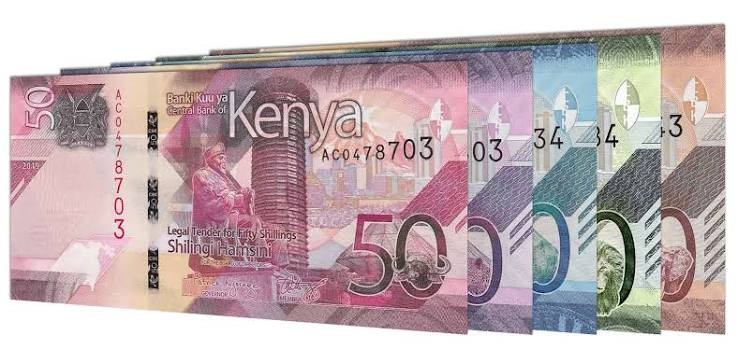
The Central Bank of Kenya (CBK) has published its daily exchange rates for Monday, October 19, 2026, placing the US dollar at KSh 129.92, the British pound at KSh 173.14, and the euro at KSh 145.79.
The rates are crucial for businesses and consumers as they monitor currency movements affecting international trade, imports and overseas payments.
The exchange rates provide a daily reference for individuals and businesses dealing in foreign currencies, including importers paying overseas suppliers, exporters receiving international payments, and families sending money across borders.
However, it is important to note that the published rates are indicative and may differ from the actual buying and selling rates offered by commercial banks and foreign exchange bureaus.
Among the major international currencies, the British pound recorded the highest quoted value against the Kenyan shilling at KSh 173.14. The euro was quoted at KSh 145.79, while the US dollar stood at KSh 129.92.
Additionally, the Japanese yen was quoted at KSh 82.16 per 100 yen, equivalent to approximately KSh 0.82 per yen.
This rate is particularly relevant to businesses and individuals making payments involving Japan, including importers purchasing machinery, electronics, and other products from the Asian market.
Within the East African region, the CBK listed the Uganda shilling at KSh 31.97 per 100 units, the Tanzania shilling at KSh 20.35 per 100 units and the Rwanda franc at KSh 11.37 per 100 units.
These rates provide a reference for cross-border transactions involving Kenya and its regional trading partners.
The South African rand was quoted at KSh 7.89, offering another reference point for businesses and consumers transacting with Africa's largest industrial economy.
Foreign exchange movements are vital to Kenya's economy as the country relies on imports of fuel, machinery, industrial inputs, and other essential goods.
Changes in the shilling's value against major currencies can influence import costs, business expenses, and, potentially, prices paid by consumers.
A weaker shilling generally makes foreign goods and services more expensive in local currency terms, while a stronger shilling can reduce the cost of imports.
The final impact depends on market exchange rates, contractual arrangements, and other costs incurred by businesses.
The CBK's daily exchange-rate updates help market participants follow currency valuations, although the figures alone do not establish whether the shilling has strengthened or weakened without comparison with previous rates.
Businesses, investors and consumers will continue monitoring the central bank's subsequent exchange-rate publications for changes that could affect international payments, import costs, and regional trade.