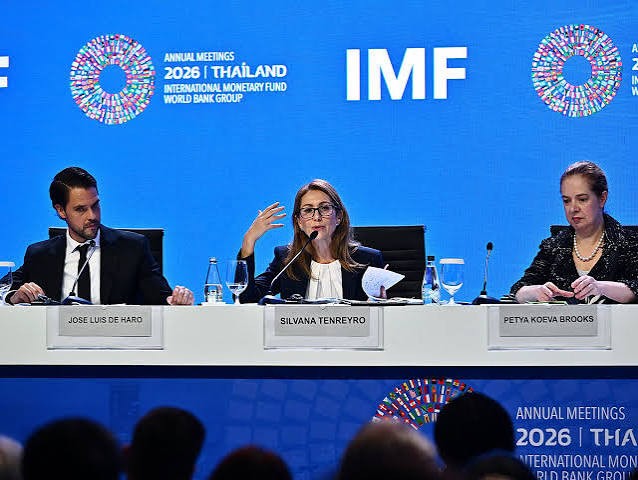
Developing countries left the International Monetary Fund (IMF) and World Bank annual meetings in Bangkok, Thailand, on October 18, 2026, with few concrete solutions to mounting debt costs, geopolitical conflicts and the economic risks posed by artificial intelligence (AI), as global lenders continued to urge fiscal discipline and reforms to attract private investment.
The meetings brought together finance officials, economists and policymakers to discuss challenges facing the global economy, including the conflict in the Middle East, Russia’s ongoing war in Ukraine and uncertainty surrounding the rapid expansion of AI. However, delegates from lower-income economies continued to face questions about how to finance development while managing increasingly expensive public debt.
IMF Managing Director Kristalina Georgieva said average debt-service payments in developing countries had more than doubled over the past decade to reach 14% of government revenue. The increase is leaving governments with less money for essential services, including education and healthcare, as higher borrowing costs put additional pressure on national budgets.
Georgieva also argued that developing economies were being affected by fiscal imbalances in wealthier countries. Although debt levels in some developing nations had declined in recent years, rising bond yields elsewhere had contributed to higher borrowing costs for countries seeking financing.
The meetings also highlighted uncertainty over whether developing economies can benefit from the AI boom without falling further behind advanced countries. While AI could improve productivity and support economic growth, participants raised concerns about the lack of practical guidance on preparing for technological disruption and ensuring its benefits reach lower-income populations.
Mauricio Cardenas, Colombia’s former finance minister and a research scholar at Columbia University, said policymakers were concerned about the possibility of a major economic shock but lacked a clear roadmap for navigating the risks. He questioned whether the IMF and World Bank were adequately prepared for the emerging challenges surrounding AI.
Meanwhile, global economic growth has slowed despite the world avoiding a recession. World Bank Deputy Chief Economist Ayhan Kose said growth in developing economies had fallen to approximately 3.6%, down from 4.4%, while growth prospects had also weakened across advanced economies.
Developing countries are also contending with declining official development assistance and difficulties attracting foreign investment. The World Bank has been working to mobilise private capital to support development projects, but financing gaps remain a challenge for governments seeking to expand infrastructure and create jobs.
The meetings ended without major new initiatives addressing these concerns, leaving governments to balance spending cuts, economic reforms and investment needs amid continuing uncertainty. Developing countries will now be watching for concrete financing commitments and practical policy measures from the IMF and World Bank as they prepare for further economic and technological shocks.