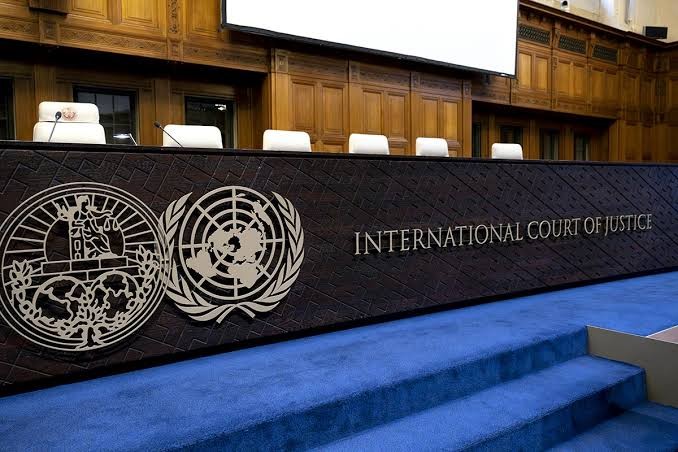
The International Court of Justice (ICJ) is expected to deliver its verdict on Thursday in a landmark case filed by The Gambia against Myanmar over the alleged genocide of the Rohingya Muslim minority, in proceedings that could mark the first time a state is found guilty of genocide by an international court.
The case, filed in November 2019 and backed by the Organisation of Islamic Cooperation, accuses Myanmar of violating the 1948 Genocide Convention through its military crackdown on the Rohingya population in Rakhine State.
The Gambia argued that all states party to the convention have a legal interest in ensuring its provisions are upheld, regardless of whether they are directly affected by the alleged atrocities, and therefore have a responsibility to pursue accountability.
Since the Genocide Convention was adopted in 1948 following the Nazi Holocaust, dozens of individuals have been prosecuted for genocide in conflicts including Rwanda and the former Yugoslavia. However, no state has ever been found guilty of committing genocide by an international court.
A ruling against Myanmar would therefore mark a historic milestone in international law and potentially strengthen accountability for atrocities committed by states.
The mass expulsion of Rohingya Muslims from Rakhine State in August and September 2017 was marked by widespread brutality, forcing hundreds of thousands to flee across the border into neighbouring Bangladesh.
Survivors have recounted killings, torture and mass rape by Myanmar's military, allegations extensively documented by human rights organisations and a United Nations fact-finding mission.
Myanmar has consistently denied accusations of genocide and ethnic cleansing, insisting its military was conducting clearance operations in response to attacks by Rohingya militants.
However, a UN report in 2018 concluded that the military's tactics were grossly disproportionate to the security threats and recommended investigations into senior military figures for genocide and crimes against humanity. Myanmar rejected the findings.
The ICJ, established in 1945 to resolve disputes between states, became the avenue for pursuing justice after Myanmar was not a signatory to the International Criminal Court, limiting the possibility of prosecuting its officials through that institution.
The court subsequently ruled that The Gambia had standing to bring the case, despite not being directly affected by the alleged atrocities.
The legal proceedings also drew scrutiny over Myanmar's defence, initially led in person by Nobel laureate Aung San Suu Kyi, who was widely criticised for defending her country's military and failing to condemn its actions against the Rohingya.
Proving genocide, however, remains a difficult legal undertaking. The court requires compelling evidence that perpetrators intended to destroy, in whole or in part, a protected ethnic, racial, religious or national group.
Myanmar's defence has argued that atrocities committed during the military operations do not necessarily demonstrate genocidal intent, maintaining that the conflict was complex and involved security threats.
The Gambia's legal team, however, has pointed to decades of discrimination against the Rohingya, including restrictions on citizenship, education, healthcare, employment and freedom of movement, arguing that these policies provide evidence of an intent to destroy the community.
A verdict against Myanmar could carry significant international reputational consequences, although the ICJ has no mechanism to impose criminal penalties or enforce its rulings directly.
For the Rohingya community, the case represents more than a legal battle. Survivors and activists hope a ruling in their favour will provide formal recognition of their suffering and strengthen international pressure for a safe and dignified return to Myanmar.
More than a million Rohingya remain in refugee camps in Bangladesh, while Rakhine State continues to be ravaged by conflict between Myanmar's military and the Arakan Army.
Many Rohingya villages have been destroyed, and the prospects of a safe return remain uncertain despite the landmark proceedings.