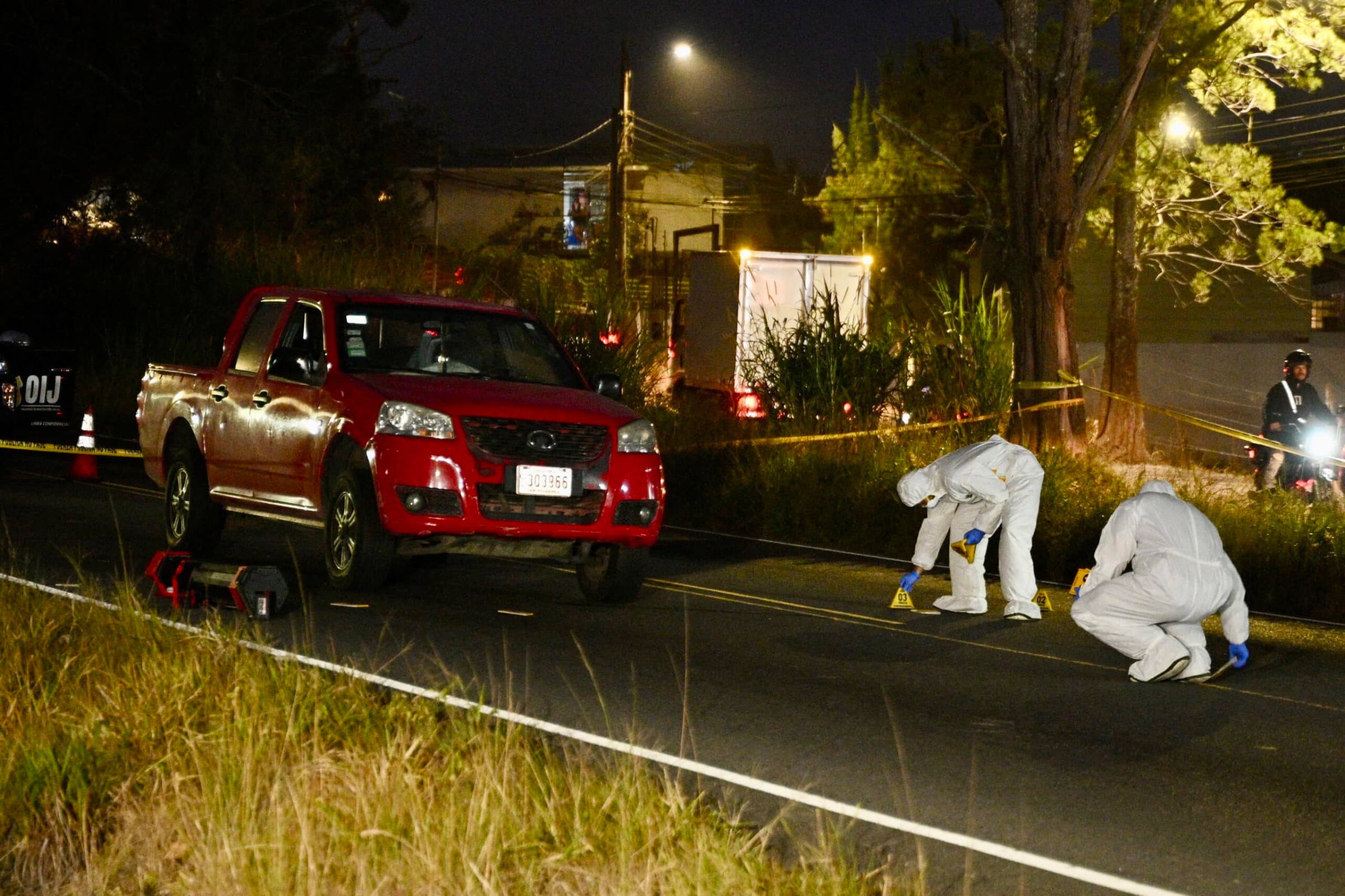
Costa Rican journalist Camilo Rodríguez has been shot dead in a motorcycle ambush near the capital, San José, after years of publicly exposing alleged connections between drug traffickers, politicians and other influential figures.
Rodríguez was attacked on Monday, November 16, 2026, while driving along Route 32 in Santo Domingo de Heredia. Two armed men travelling on a white motorcycle reportedly intercepted his vehicle and opened fire before fleeing the scene.
The Costa Rican Red Cross received an emergency alert at approximately 3:21 p.m. local time. Responders found the journalist with multiple gunshot wounds inside his vehicle and confirmed that he had died at the scene.
Details of the attack
The country’s Judicial Investigation Agency (OIJ) said the attackers were dressed in black and escaped towards San José. Investigators recovered between nine and ten bullet casings outside the vehicle, while preliminary examinations indicated that Rodríguez had sustained several gunshot wounds.
Authorities are examining nearby surveillance footage to establish the attackers’ movements and identify those responsible. The investigation is also seeking to establish whether the assailants acted alone or were hired to carry out the killing.
Rodríguez, an independent journalist who had worked in radio, television and print media for several decades, had become increasingly prominent through videos published on social media.
In his reports, he named individuals, including politicians, judges and business people, whom he accused of having links to drug trafficking networks and organised crime.
He had previously said he was receiving death threats from suspected drug trafficking groups.
According to Attorney General Carlo Díaz, Rodríguez had been referred to victim support and protection services but declined to enter a protection programme.
Díaz said investigators would examine the journalist’s previous complaints and public allegations as part of efforts to establish both the people who carried out the attack and those who may have ordered it.
Reactions from officials
He described the crime scene as resembling a contract killing, although authorities have not established the motive or identified the individuals behind the murder.
President Laura Fernández condemned the killing, describing it as a stain on freedom of expression. She said she had instructed security agencies to pursue those responsible and ensure they were brought to justice.
The president had previously taken legal action against Rodríguez over a video in which he alleged that a company linked to a criminal gang had been involved in constructing her residence.
Fernández categorically denied the allegations and accused the journalist of defamation. No evidence has established any connection between the dispute and his murder.
The president of the Costa Rican Journalists’ Association, Yanancy Noguera, said the available evidence pointed towards an attempt to silence a voice that had published information about organised crime.
The murder has renewed concerns about journalist safety in Costa Rica, which has historically been regarded as one of Central America’s more peaceful countries. It is the first known killing of a journalist in the country since the 2001 murder of radio journalist Parmenio Medina.
Concerns over journalist safety
Medina was shot dead after investigating alleged corruption involving a religious radio programme. His killing remains a significant reference point in Costa Rica’s history of attacks against journalists.
The latest attack also comes as the country faces growing pressure from international drug trafficking networks, with rising organised crime contributing to increased insecurity and a higher homicide rate over the past decade.
Díaz said the killing of someone reporting on drug trafficking and corruption was unacceptable in a democratic society, pledging that the investigation would pursue everyone involved.