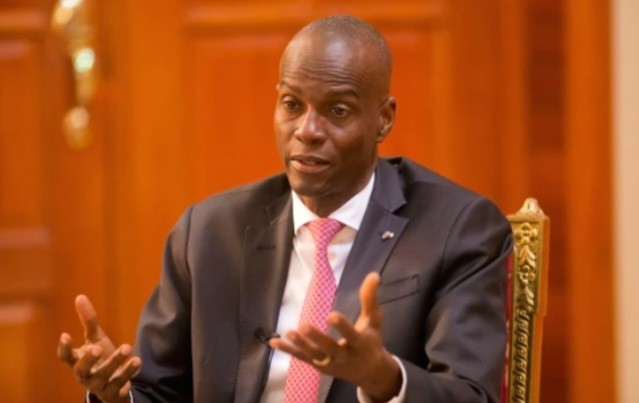
A Florida-based pastor has been found guilty of conspiracy charges linked to the 2021 assassination of Haitian President Jovenel Moïse, a killing that plunged the Caribbean nation into prolonged political instability.
Christian Emmanuel Sanon, who holds dual Haitian-American citizenship, was convicted on Wednesday by a federal court jury in Miami after a trial that lasted nearly eight weeks.
Sanon was found guilty on all charges, including conspiring to kill Moïse. He had faced eight charges, with the most serious involving conspiracy to kidnap or kill a person outside the United States.
The verdict marks a major development in the US investigation into the assassination, which took place on July 7, 2021, when a group of armed men attacked Moïse at his residence in Port-au-Prince.
Sanon showed little reaction as the jury announced its decision. He remains in federal custody and faces a possible life sentence. His sentencing has been scheduled for February 10 next year.
His lawyer, Zeljka Bozanic, said the defence team was disappointed with the verdict and intended to appeal at the appropriate time.
During the trial, federal prosecutors argued that South Florida played a central role in planning and financing the operation intended to remove Moïse from power and install a new leader of the conspirators' choosing.
They told the court that Sanon was initially considered their preferred candidate to replace the Haitian president.
According to the prosecution, Sanon helped raise funds for the alleged conspiracy and made arrangements for travel to Haiti and accommodation for himself and other individuals involved in the plan.
However, Sanon denied knowing about any plot to kill the president.
While giving evidence during the trial, he acknowledged communicating with individuals who were seeking to replace Moïse but maintained that the group had abandoned him as its preferred candidate long before the assassination took place.
Born in Haiti, Sanon moved to the United States as a teenager. He testified that he had worked with churches serving Haitian immigrant communities in Florida and the Midwest.
Moïse was killed during a nighttime raid at his home in the capital, Port-au-Prince. His wife was also wounded in the attack.
Haitian authorities said the operation was carried out by a group of mostly retired Colombian soldiers, although the circumstances surrounding the killing have continued to attract legal and political attention.
The assassination left Haiti without a president and deepened an already difficult political situation in the country.
Haiti, regarded as the poorest country in the Americas, has experienced years of political upheaval, dictatorship and foreign intervention, factors that have repeatedly undermined efforts to establish stable democratic leadership.
The killing of Moïse further intensified the country's political crisis, leaving questions over leadership and governance as the investigation into the assassination continued.
Sanon's conviction adds to the legal proceedings arising from the plot, with his sentencing and planned appeal expected to be the next major developments in his case.