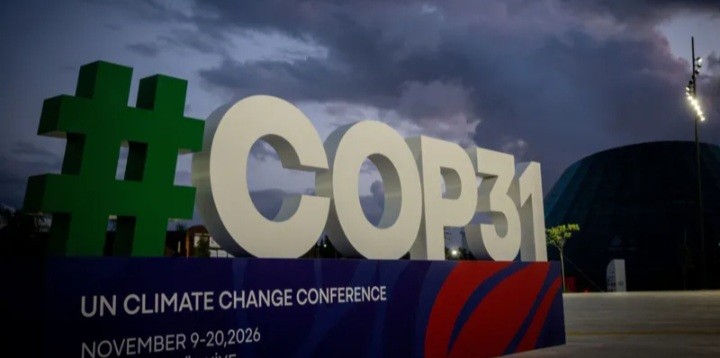
The 31st United Nations Climate Change Conference (COP31) has ended without a major political agreement after countries failed to reach consensus on key issues, including fossil fuel commitments and financial support for developing nations.
The summit, held in Antalya, Turkey, brought together governments and climate representatives at a time when the effects of global warming continue to intensify across different parts of the world.
The conference was jointly hosted by Turkey and Australia, with organisers hoping to make it an implementation-focused summit that would move countries from climate promises to practical action.
However, the negotiations ended in disappointment after deep disagreements between participating nations prevented the adoption of the proposed Antalya Pacts, which were expected to provide a new direction for international climate action.
According to a report by the BBC, the final day of negotiations was marked by heated exchanges, disagreements and walkouts by some countries over the failure to include clear language on fossil fuels in the proposed agreement.
The disagreements exposed growing divisions among nations over how quickly the world should move away from coal, oil and gas, as well as who should take responsibility for financing climate action.
One of the major challenges was the failure to agree on reaffirming commitments made at previous climate conferences.
At COP28 in Dubai, countries agreed to transition away from fossil fuels in energy systems. However, efforts to include similar language in the latest agreement faced resistance from some nations.
Developing countries also pushed for clearer commitments on climate financing, particularly support to help them adapt to rising temperatures, floods, droughts and other extreme weather events.
Although there was an existing commitment to triple adaptation finance by 2035 from the $40 billion baseline, countries remained divided over how the pledge should be interpreted and implemented.
Australian Climate Minister Chris Bowen acknowledged the difficult political environment surrounding the negotiations, noting that the global situation had become increasingly complicated.
European Union representative Darragh O'Brien criticised the direction of the talks, accusing some oil-producing countries of hijacking the negotiations.
Meanwhile, Russian delegate Sergei Kononuchenko challenged the European Union over its climate financing approach, arguing that providing developing countries with loans rather than grants reflected an unfair system.
Despite the failure to secure the main agreement, COP31 recorded progress on several other climate-related issues.
Countries agreed that funds generated through the global carbon credit system would help developing nations finance climate adaptation programmes.
They also agreed to advance a just transition framework aimed at protecting workers and communities as economies gradually move towards cleaner sources of energy.
However, several important issues remained unresolved and are expected to be carried forward to the next climate conference, including negotiations on reducing greenhouse gas emissions.
Another major issue discussed during the summit was the growing likelihood that global temperatures will exceed the 1.5 degrees Celsius threshold set under the 2015 Paris Climate Agreement.
The threshold was established to limit the most dangerous effects of climate change, but current global emission trends have raised concerns about the world's ability to meet the target.
Scientists have warned that a world experiencing 2 degrees Celsius of warming would face more severe consequences, including rising sea levels, extreme heat and increased risks to marine ecosystems.
The discussions also highlighted the growing importance of renewable energy as countries seek alternatives to fossil fuels.
According to the International Energy Agency, renewable energy capacity is expected to expand significantly over the next six years, supported by falling costs of solar panels, batteries and electric vehicles.
Energy security concerns have also encouraged governments to consider locally generated renewable electricity as a way of reducing dependence on imported fossil fuels.
International Energy Agency Executive Director Fatih Birol told the BBC that the world had already entered the age of electricity, noting that energy security and climate policies were becoming increasingly connected.
The developments have raised fresh questions about the effectiveness of annual UN climate conferences, particularly when countries struggle to agree on commitments that have already been discussed at previous meetings.
While the Paris Agreement established an international framework for climate action, the failure of COP31 to deliver its central political agreement has renewed concerns about the ability of governments to work together as the climate crisis deepens.
The next conference is expected to provide another opportunity for countries to revisit unresolved issues and strengthen efforts to reduce emissions and support communities facing the effects of climate change.