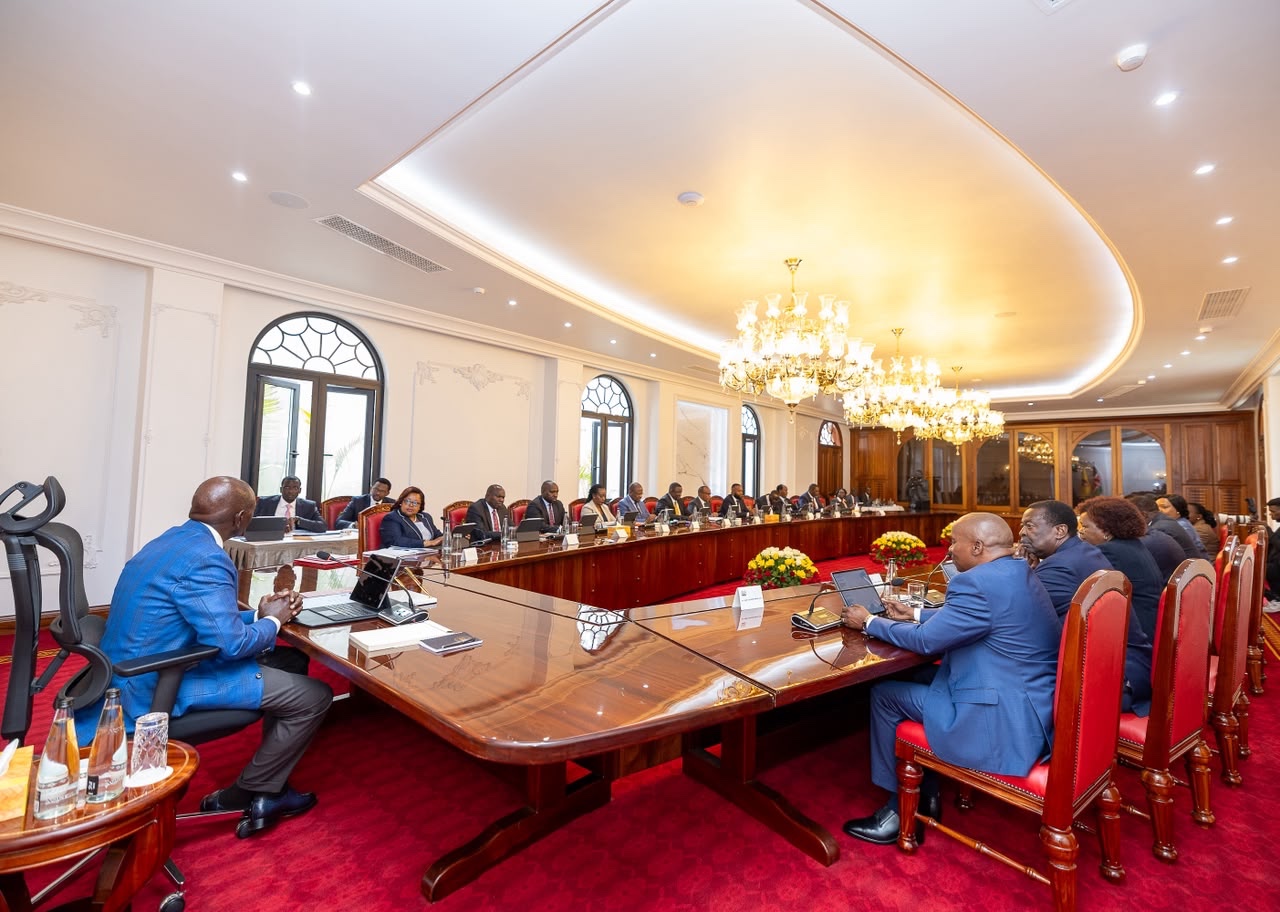
The Cabinet has approved the settlement of verified government pending bills worth Sh23.74 billion, offering relief to thousands of suppliers and contractors, some of whom have waited for payment since 2005.
The payments will cover 28,726 verified claims of Sh50 million and below, representing 98 per cent of the 29,257 claims recommended for settlement following a review by the Pending Bills Verification Committee.
According to a Cabinet statement issued on October 9, the committee received 115,617 claims valued at Sh664.8 billion, but only 29,257 claims worth Sh155.34 billion were recommended for payment after verification.
The National Treasury will oversee the settlement process, with priority given to micro, small and medium-sized enterprises, particularly businesses owned by women, young people and persons with disabilities.
The government says the payments are expected to ease cash-flow constraints facing businesses, protect jobs and restore confidence among suppliers and contractors.
Pending bills exceeding Sh50 million will be settled progressively.
The latest decision follows the earlier clearance of more than Sh80 billion in pending bills in the roads sector.
In the health sector, Cabinet approved an extensive hospital infrastructure programme that includes the construction of a new 2,000-bed Moi Teaching and Referral Hospital and a 1,000-bed Level Six hospital in Mombasa.
The plan also provides for the expansion of 13 Level Five hospitals in Mandera, Marsabit, Turkana, Kilifi, Embu, Nakuru, Laikipia, Migori, Nyamira, Baringo, Bomet, Narok and Kisii counties, with each facility expected to gain an additional 300 beds.
Cabinet also endorsed a separate Sh8 billion healthcare programme in partnership with France to establish and equip specialised head and neck surgical units at Kenyatta National Hospital, Moi Teaching and Referral Hospital and the University of Nairobi Dental Hospital.
The programme will also support cancer treatment and the training of 5,000 community health workers.
On energy, the government adopted the Kenya National Energy Compact, which seeks to mobilise approximately Sh2.47 trillion in investment and connect an additional 5.1 million households to electricity by 2030.
A separate programme valued at 8.8 million US dollars, equivalent to approximately Sh1.1 billion, will support the uptake of 100,000 electric cooking appliances in Nairobi, Kiambu, Machakos and Kajiado counties.
Cabinet also approved additional financing of Sh12.83 billion to complete Thwake Multipurpose Dam, which is expected to supply 150,000 cubic metres of water daily to approximately 1.3 million people in Makueni and Kitui counties, including Wote and surrounding areas, as well as Konza Technopolis.
In infrastructure, three major road corridors were cleared for advancement under the Roads for Rural Economic Development Programme.
They include the 253-kilometre South Rift–Lake Region Gateway Corridor, the 256-kilometre Great Highlands Connectivity Corridor and the approximately 400-kilometre Lake Victoria Ring Road.
The projects are intended to improve access to markets for agricultural producers, fishing communities and trading centres while reducing transport costs and travel times.
Cabinet further adopted the Sessional Paper on Transforming Education, Training and Research, paving the way for reforms targeting teacher shortages, expansion of technical and vocational education, stronger Competency-Based Education and improved alignment between training and labour market needs.
Kenya Airways also received a financial boost after Cabinet approved 350 million US dollars in shareholder financing to meet urgent obligations, including aircraft maintenance and the return of grounded planes to service.
The funds will be released in tranches under National Treasury oversight, with repayment spread over up to 10 years and the possibility of conversion into equity, subject to approvals.
The meeting also endorsed a proposal to convert Sh122 billion in existing government loans, plus accrued interest, into an equity-qualifying tradable instrument to strengthen the national carrier's balance sheet and support future fundraising.
The measures remain subject to the required corporate, shareholder and regulatory approvals.
On environmental conservation, Cabinet reviewed preparations for Mazingira Day, marked on October 10, with activities under Mazingira Week targeting the mobilisation of 200,000 Kenyans to plant six million trees within one hour.
The initiative contributes to the national target of growing 15 billion trees by 2032.
The government also considered plans to restore 462,299 hectares of degraded landscapes and approved additional financing for community-led climate action programmes across all 47 counties.
In the financial sector, Cabinet adopted the National Insurance Policy 2026, which seeks to make insurance more affordable and accessible, particularly for farmers, informal sector workers and small businesses.
The policy proposes stronger consumer protection, tighter oversight of insurers, measures to combat fraud and wider access to digital insurance services.
Cabinet also cleared the Architectural and Quantity Surveying Practitioners Bill 2026, which proposes tougher penalties for unqualified practitioners, including fines of up to Sh2 million or imprisonment for up to two years for false registration or licensing.
Two additional measures, the Geographical Indications Bill 2026 and the Warehouse Receipt System (Amendment) Bill 2025, were approved to protect distinctive Kenyan products, improve farmers' access to markets and credit, and reduce post-harvest losses.
The Cabinet further endorsed the Prisons Bill 2026 and the Probation of Offenders Bill 2026, which seek to improve rehabilitation, safeguard prisoners' rights, address overcrowding and expand alternatives to imprisonment for eligible offenders.
To improve the business environment, the meeting supported measures to simplify business licensing and reduce regulatory barriers.
It also backed the establishment of a European Bank for Reconstruction and Development office in Nairobi to expand access to investment financing.
Other decisions included double taxation agreements with Belgium and the Czech Republic, as well as space cooperation arrangements with South Africa and Kazakhstan.
On public health, Cabinet reviewed the country's preparedness following a single imported Ebola case involving a patient who has since died.
The government said enhanced surveillance, screening, contact tracing and health facility preparedness measures were in place, describing the case as isolated and urging the public to remain calm and follow official health advisories.