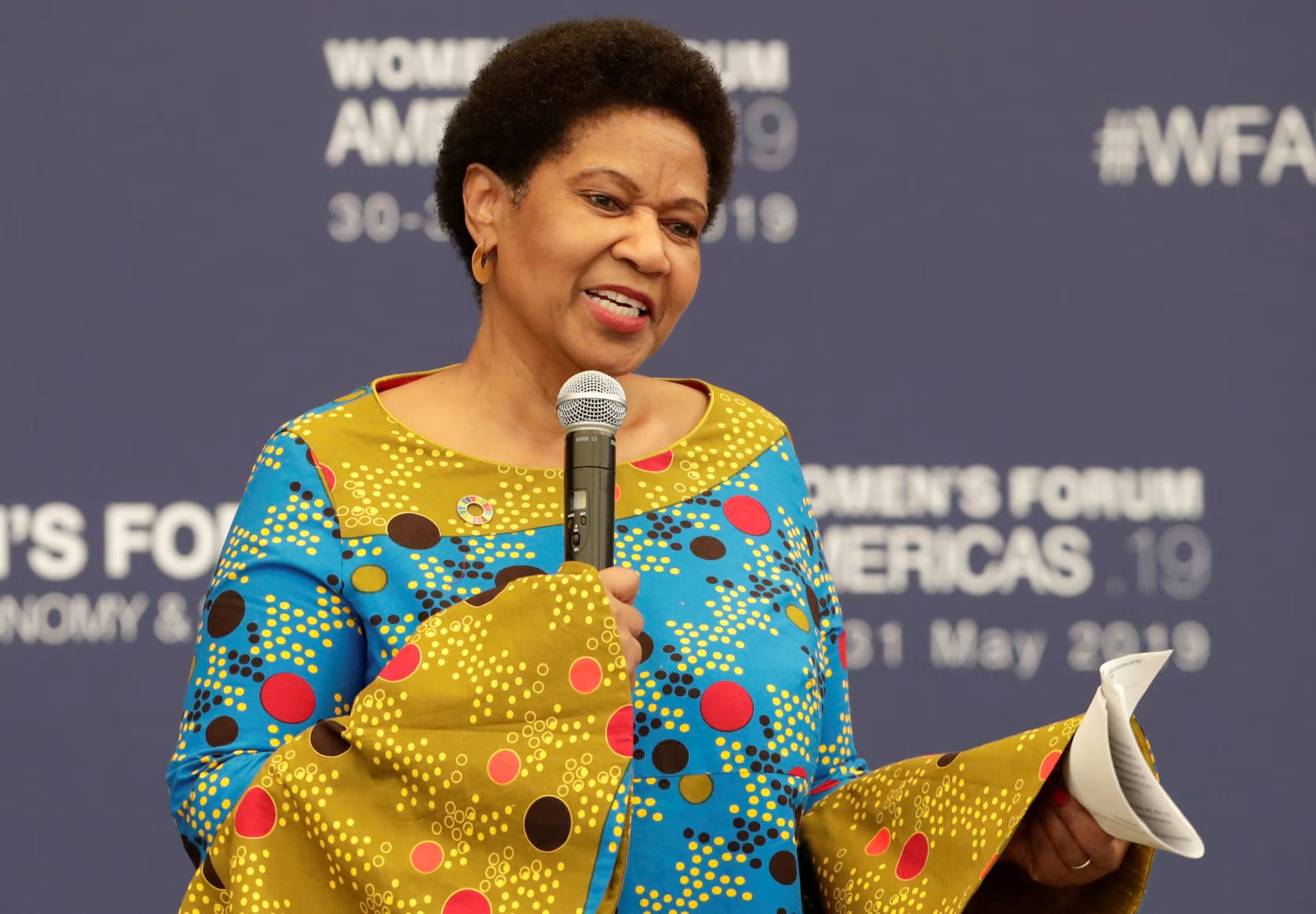
The African Union Commission has paid tribute to former South African Deputy President Phumzile Mlambo-Ngcuka following her reported death, celebrating her contribution to women's leadership, gender equality and peacebuilding across the continent.
In a condolence statement, AU Commission Chairperson Mahmoud Ali Youssouf described Mlambo-Ngcuka as an outstanding African leader whose dedication to public service, social justice and the advancement of women had left an enduring legacy.
Mlambo-Ngcuka made history as South Africa's first female Deputy President, helping pave the way for greater representation of women in political leadership.
She later served as Executive Director of UN Women between 2013 and 2021, where she championed gender equality and advocated for the meaningful participation of women in peace negotiations, decision-making and post-conflict recovery.
Youssouf also highlighted her contribution to the African Union-led mediation process that culminated in the signing of the Pretoria Agreement on November 2, 2022, between the Ethiopian government and the Tigray People's Liberation Front.
The agreement, formally known as the Agreement for Lasting Peace through a Permanent Cessation of Hostilities, sought to end the conflict in Ethiopia's Tigray region.
The AU Chairperson said her involvement in the peace process demonstrated her commitment to advancing peaceful solutions to conflicts on the continent.
He extended condolences to her family, loved ones and the people and government of South Africa, saying her contribution would continue to inspire future generations.
The African Union noted that her work extended beyond national leadership, influencing continental and international efforts to address inequalities and strengthen women's participation in governance.
Her involvement in the Ethiopian peace process also reflected the importance of inclusive mediation in resolving conflicts and securing lasting peace.
Through her leadership at UN Women, she championed opportunities for women and girls while pushing for policies that addressed barriers to equality.
Her contribution to Africa's political and diplomatic landscape remains a significant part of her public service legacy.