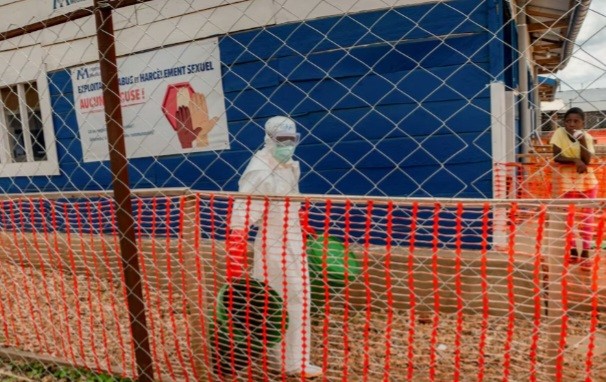
The Africa Centres for Disease Control and Prevention (Africa CDC) has warned that the Ebola outbreak in the Democratic Republic of Congo (DRC) remains out of control, six months after it was officially declared.
The agency's Director-General, Jean Kaseya, said the outbreak continues to pose a serious public health threat, citing attacks on health workers, delayed salaries and inadequate resources as some of the major challenges hampering efforts to contain the disease.
Speaking to Reuters on Sunday, November 15, Kaseya said health authorities and response teams were still struggling to bring the situation under control despite ongoing interventions and international support.
Current status of the outbreak
According to government data cited by Reuters, more than 11,200 infections and 5,500 deaths have been reported since the outbreak was declared on May 15, making it one of the deadliest Ebola outbreaks recorded in recent years.
Kaseya expressed concern over the continued spread of the virus, revealing that more than 80 per cent of new infections were being identified outside known contact lists.
He added that over 65 per cent of deaths were occurring within communities rather than health facilities, making it difficult for medical teams to identify and isolate cases early enough.
The Africa CDC chief warned that the situation could become even worse if urgent measures were not taken to strengthen surveillance, improve access to treatment and ensure that infected people receive medical attention.
"If we don't stop this outbreak now, it would be the worst Ebola outbreak that the world will have," he warned.
The current outbreak is being driven by the Bundibugyo strain of the Ebola virus, a relatively rare variant that has previously caused outbreaks in parts of Central and East Africa.
The outbreak is already considered the second-largest Ebola epidemic on record, following the 2014–2016 West African outbreak, which infected more than 28,600 people and claimed over 11,000 lives.
Concerns from international organizations
Meanwhile, Médecins Sans Frontières (MSF), an international medical humanitarian organisation, has raised concerns over gaps in the response, warning that resources pledged by international partners were yet to reach some of the most affected areas.
The organisation pointed to shortages of trained medical personnel, ambulances operating without fuel and inadequate surveillance teams, which have affected efforts to track infections and respond to new cases.
Despite international partners pledging approximately 2.9 billion US dollars to support the response, Kaseya said funding and coordination challenges continued to undermine containment efforts.
He called on donors to release about 1.6 billion US dollars in pledged assistance and work more closely with the government in Kinshasa to ensure the money reaches affected communities and is used effectively.
Call for improved funding and coordination
Kaseya also acknowledged that some healthcare workers had gone for months without receiving their salaries, a situation that has affected morale and the ability of medical teams to sustain their operations.
He said the Congolese government was working to digitise its payroll system to address payment challenges and improve accountability.
The Africa CDC director-general further emphasised the need for better coordination between the Congolese government and international donors, warning that duplication of activities and delays in releasing funds could undermine the response.
While acknowledging the challenges, Kaseya said the situation required collective responsibility rather than blame, urging all partners to work together to prevent further loss of life.
Urgent need for collective action
The warning comes amid growing international concern over the outbreak, with health officials calling for urgent action to strengthen response systems and prevent the virus from spreading further.