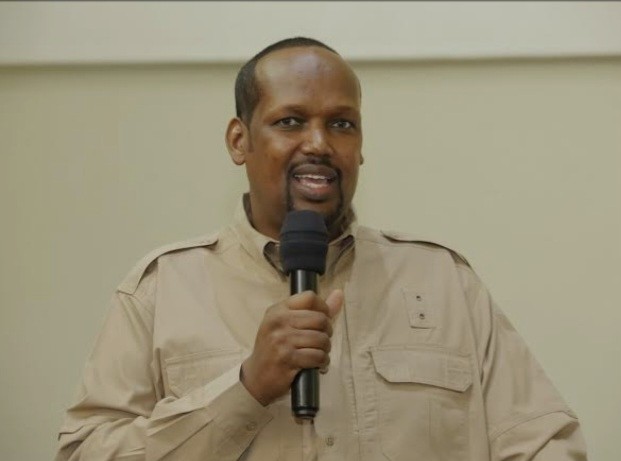
Former Mandera Governor and Third Senator of Mandera County, Captain Ali Roba, has raised concern over the continued violence in Moyale and the wider Dawa Zone, warning that the conflict between communities in Ethiopia could undermine the country's national unity.
In a strongly worded statement, Roba questioned the gains made by the rival sides after weeks of bloodshed, destruction and displacement, arguing that the fighting had brought more suffering than any meaningful progress.
He said there was no independently established evidence of lasting territorial gains that could justify the loss of lives, destruction of property and disruption of livelihoods.
Roba noted that although the disputed land remained intact, innocent people had lost their lives, families had been separated and relations between communities that had coexisted for generations had been damaged by mistrust.
He cited estimates by Islamic Relief indicating that nearly 700,000 people had been displaced across the Somali and Oromia regions, questioning whether any political or territorial ambition could justify a humanitarian crisis of such magnitude.
The former governor cautiously welcomed reports of a peace initiative by Ethiopia's federal military but said the government's handling of the conflict had raised concerns about its neutrality.
He pointed to the prolonged failure to contain the violence and allegations of federal involvement, calling for independent investigations to establish the facts.
According to Roba, the federal government's neutrality should be demonstrated through its actions rather than public statements.
He also called on Prime Minister Abiy Ahmed to address the wider political and security challenges facing Ethiopia, warning that multiple conflicts across the country were putting pressure on the stability of the federation.
Roba cited renewed fighting in Tigray, ongoing insurgencies in Amhara and Oromia, insecurity in Gambella and Benishangul-Gumuz, as well as the Somali-Oromia conflict, saying the growing number of conflict zones threatened the country's cohesion.
He questioned how long Ethiopia could sustain several security crises without weakening the trust between the federal government and the communities it serves.
Roba further criticised the growing perception that national interests were being overshadowed by regional political ambitions, saying concerns about governance and alleged ethnic favouritism could not simply be ignored.
He said the legitimacy of federal leadership depended not only on constitutional authority but also on the confidence of all communities across the country.
On relations between the Somali and Oromo communities, Roba stressed that the two groups were permanent neighbours who could not wish each other away.
He argued that geographical boundaries could not be settled through violence and urged both communities to pursue dialogue and peaceful coexistence.
Roba said Moyale should be transformed into a centre of shared economic opportunities rather than remain a battleground for competing identities.
He pointed to the proposed dry port and other development opportunities, saying they should benefit both regions and the wider Ethiopian federation through negotiated agreements, fair sharing of resources and respect for lawful territorial boundaries.
He called for a lasting ceasefire, impartial security arrangements, independent investigations into the conflict, humanitarian assistance for affected families and a binding framework to guarantee peaceful coexistence.
Roba concluded that a conflict that leaves territorial boundaries unchanged but claims innocent lives cannot be considered a victory for either side.
He urged Ethiopia's leadership and communities to pursue unity based on justice, equality and mutual respect, warning that a country cannot protect its territorial integrity while allowing the trust among its people to collapse.